Whether you are preparing for CAT, Bank PO (SBI/IBPS), GRE, GMAT, or UPSC CSAT, Reading Comprehension (RC) is a major component of the verbal or aptitude sections. For many aspirants, it is one of the most intimidating areas because it combines reading speed, comprehension, inference, and time management.
They start their preparation by diving straight into high-difficulty mock tests or dense editorial passages. They quickly find themselves reading the same paragraph three times, running out of time, and losing marks to subtle option traps.
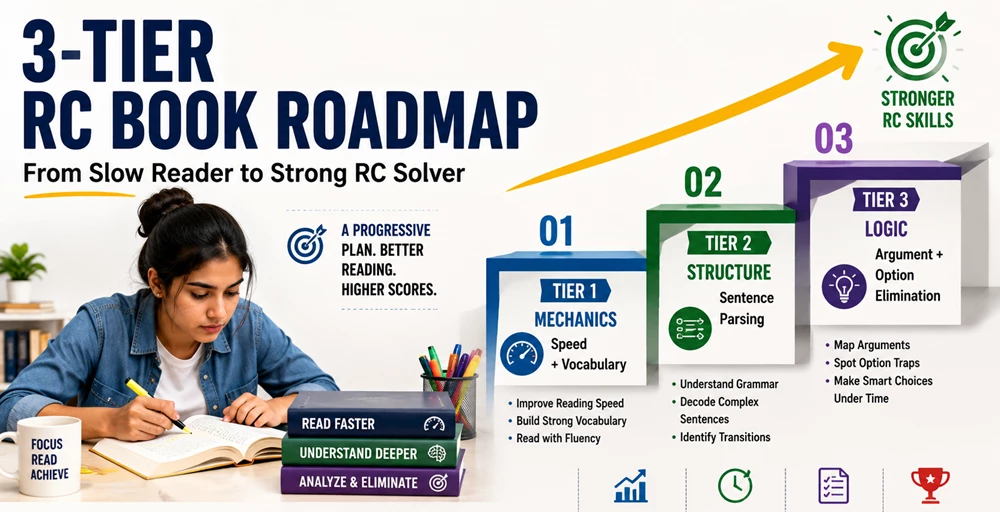
To bridge the gap between struggling through 500-word passages and scoring at the 99th percentile, you need a progressive plan. Here is a 3-Tier Book Roadmap designed to systematically transform your reading speed, analytical comprehension, and option-elimination skills. So, you will be able to score from RC questions quickly and confidently.
Note: Our book recommendations are based on preparation for beginners to advanced learners, for solving RC tests in various competitive exams.
From Slow Reader to Strong RC Solver: A 3-Tier Book Roadmap
1. Tier 1: Foundational Mechanics (Speed & Vocabulary)
Target Duration: 3 to 4 Weeks.
Before attempting complex exam passages, you may need to address two common obstacles: excessive subvocalization (pronouncing words in your head as you read) and vocabulary bottlenecks.
Primary Books to Use:
Actionable Execution:
Eliminate Word-by-Word Reading: Use How to Read Faster and Better to practice widening your visual focus so that you can process small groups of words rather than consciously reading every word one by one. With this book, you can read faster and understand better than ever before.
Master Contextual Roots: Complete a manageable number of sessions consistently from Word Power Made Easy. Focus on understanding roots and how unfamiliar words can be interpreted from context rather than memorizing definitions in isolation. You can expand your English vocabulary faster with this book.
Target Benchmark: Gradually increase your reading speed while maintaining strong comprehension. Track both WPM (words per minute) and accuracy rather than chasing a specific speed at the expense of understanding.
For many learners, reaching roughly 200–250 WPM on reading non-fiction while retaining good comprehension can be a useful practice benchmark—not a requirement.
2. Tier 2: Structural Grammar & Sentence Dissection
Target Duration: 4 Weeks.
Once your baseline reading speed improves, the next challenge is learning to read long, complex sentences with multiple clauses, prepositions, and modifiers.
Primary Books to Use:
Actionable Execution:
Master Transition Signpost Rules: Focus on chapters covering mainly conjunctions and prepositions. Learn how transition and signaling words such as nonetheless, although, albeit, however, and paradoxically signal contrast, qualification, concession, or a change in direction.
Isolate the Core Subject and Verb: Practice stripping away filler modifiers in dense 40-word sentences to immediately locate the main subject and its action.
Target Benchmark: Accurately identify the main clause and author’s tone in multi-layered sentences on your first pass.
The goal is not to study grammar for its own sake; it is to make complex RC sentences easier to parse on the first reading. With these books, you learn different grammatical parts of a sentence that help you read faster and understand better.
3. Tier 3: Advanced Passage Logic & Option Elimination
Target Duration: 6 to 8 Weeks.
The final phase transitions from reading comprehension to critical reasoning. Here, you focus on argument mapping, identifying premises, and spotting distractor option traps under timed exam conditions.
Primary Books to Use:
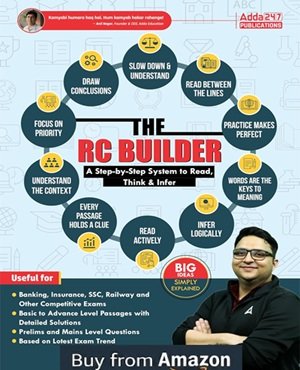
Note: For GMAT aspirants, use this bible primarily for Critical Reasoning and argument analysis; supplement it with current official GMAT practice material.
Actionable Execution:
Map Passage Architectures: For every RC passage, annotate 1–2 word structural summaries for each paragraph (e.g., Para 1: Claim → Para 2: Counter-example → Para 3: Author Thesis).
Classify Option Traps: Log every incorrect answer in your practice sets under one of the trap categories (Extreme Statement, Distorted Fact, Out of Scope, Right Statement/Wrong Question). (Learn about The 2-Option RC Trap)
Target Benchmark: Consistently achieve high accuracy on timed RC sets while gradually reducing the time required. Aim to improve both accuracy and decision-making speed rather than chasing a single universal time target.
After each RC set, learn to classify the question:
- Main idea
- Inference
- Detail
- Author’s purpose
- Tone
- Application
- Strengthen/weaken-type reasoning
Then log why each wrong option failed.
You don’t necessarily have to complete the tiers strictly in order if your weakness is different.
Which exam are you preparing for?
Based on the exam you are preparing for, do as follows:
CAT: Prioritise dense RCs, inference, author’s argument, tone, and option elimination.
GMAT: Focus on both Reading Comprehension and Critical Reasoning. The current GMAT includes both in Verbal Reasoning.
GRE: Put more emphasis on vocabulary-in-context, passage interpretation, and inference.
Bank PO: Focus on speed, factual comprehension, vocabulary, and exam-specific question formats.
UPSC CSAT: Focus on passage comprehension, inference, logical interpretation, and careful reading.
The 3-Tier Roadmap Comparison Matrix
| Tier | Primary Objective | Best For | Key Obstacle | Recommended Book Anchor |
|---|---|---|---|---|
| Tier 1: Mechanics | Build reading speed and contextual vocabulary | Readers who read slowly or struggle with unfamiliar vocabulary | Excessive subvocalization and reading fatigue | How to Read Faster and Better Norman Lewis |
| Tier 2: Structure | Parse long sentences, clauses, and transition signals | Readers who lose track of complex sentences | Getting lost in complex syntax and modifiers | Objective General English S. P. Bakshi |
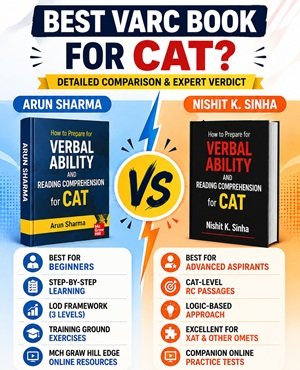
| Tier 3: Logic | Master argument mapping and option elimination | Advanced aspirants preparing for difficult RC sets | Falling for close distractor options and subtle logic traps | How to Prepare for VARC for CAT Arun Sharma |
You do not need to buy every book in this roadmap. Choose one primary resource per tier, complete the exercises seriously, and spend time reviewing your mistakes. More books do not automatically mean better preparation.
Daily 45-Minute Execution Template
To implement this 3-tier roadmap alongside your regular exam prep, follow this daily practice split:
15 Minutes (Active Speed Drill): Read 1 long-form essay from publications like Aeon, The Guardian, or The Economic Times. Time yourself and force your eyes to move in 3-word chunks.
20 Minutes (Sectional RC Practice): Solve 2 timed RC passages from your Tier 2 or Tier 3 workbooks.
10 Minutes (Error Log Review): Do not skip this step. Analyze every incorrect choice and write down the exact reason why the trap option tempted you over the correct one.
Once a week: spend 30–45 minutes reviewing your error log and identifying your three most common RC weaknesses.
Disclaimer: This post contains affiliate links. If you buy through them, we may earn a small commission at no extra cost to you. This helps us keep 99learners free! Read our affiliate disclosure.