10 Root Words to Decode 100+ SSC Vocab Words

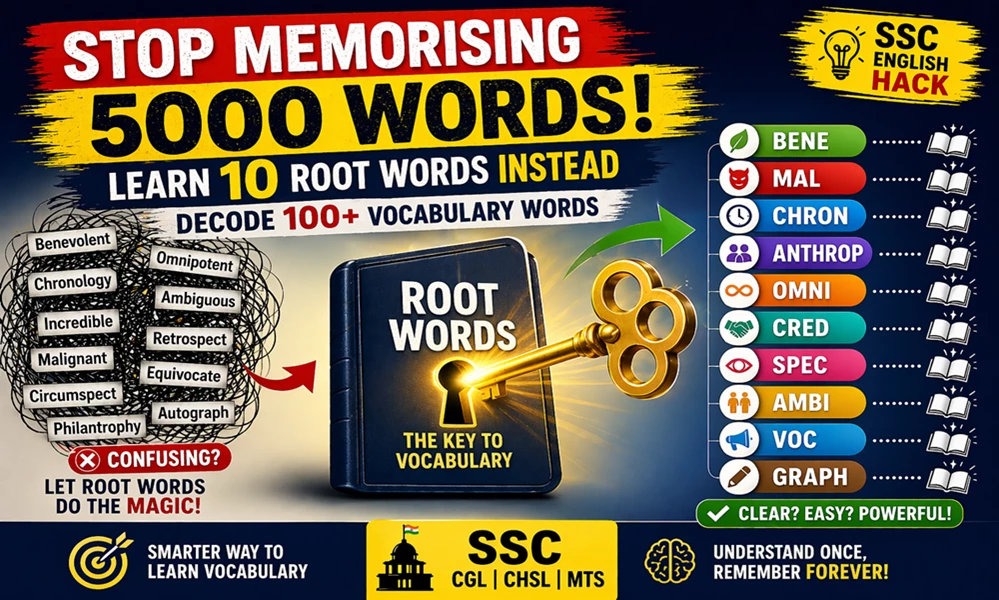
Image showing Root Words for SSC Vocab

In my 15 years of tutoring SSC aspirants among our students, I have seen most of them struggle with a “Vocabulary List” of 5,000 words. They try to memorise them one by one… only to forget them the next day.

The truth is simple:
The secret to a 45+ score in SSC English isn’t a better memory—it’s a better system.

And that system is Root Words.

A single root word can help you decode 10, 20, or even 50 words instantly. Once you understand the “core meaning,” vocabulary stops feeling random.

In this guide, I’ll show you 10 high-frequency root words that repeatedly appear in SSC CGL, CHSL, and MTS exams—and how to use them smartly.

Quick Summary

RootMeaningExample Words
BENE / BONGoodBenevolent, Benefit
MALBadMalice, Malignant
CHRONTimeChronic, Chronology
ANTHROPHumanAnthropology
OMNIAllOmnipotent
CREDBelieveCredible
SPEC / SPECTLookInspect
AMBI / AMPHIBothAmbiguous
VOC / VOKCall / VoiceVocal
GRAPH / GRAMWriteAutograph

#1. BENE / BON (Meaning: Good / Well)

Whenever you see “Bene” or “Bon” at the start of a word, it usually means something positive.

  • Benevolent: Kind and helpful (Good-willed).

  • Benediction: A blessing (Speaking good words).

  • Beneficiary: Someone who receives a “good” advantage or gift.

  • Bonus: An extra reward for “good” work.

Memory Tip:Bene = Benefit = Good”

📌 SSC Insight: Often tested in synonym questions.

#2. MAL (Meaning: Bad / Evil)

This is the opposite of “Bene.” It always indicates something negative.

  • Malevolent: Wishing evil on others.

  • Malignant: Very infectious or harmful (like a tumor).

  • Malice: The intention or desire to do evil.

  • Malnourished: Having “bad” or poor nutrition.

Memory Tip:Mal = Malware = Bad”

#3. CHRON (Meaning: Time)

SSC loves asking about time-related words in One Word Substitutions.

  • Chronological: Arranged in the order of “time.”

  • Chronic: Something that lasts for a long “time” (like an illness).

  • Synchronize: To make things happen at the same “time.”

  • Anachronism: Something out of its proper “time” (e.g., a laptop in a movie about the 1800s).

Memory Tip:Chronology = Timeline.”

#4. ANTHROP (Meaning: Human / Mankind)

  • Philanthropy: Love for mankind (Charity).

  • Anthropology: The study of humans.

  • Misanthrope: Someone who hates mankind.

Memory Tip:Anthrop = Human.”

#5. OMNI (Meaning: All)

  • Omnipotent: All-powerful.

  • Omniscient: All-knowing.

  • Omnipresent: Present everywhere at “all” times.

Memory Tip:Omni = All (like omnidirectional).”

#6. CRED (Meaning: Believe / Trust)

  • Incredible: Hard to “believe.”

  • Credulous: Someone who “believes” things too easily.

  • Credentials: Documents that prove you can be “trusted” or believed.

Memory Tip:Credit = Trust.”

#7. SPEC / SPECT (Meaning: To Look / See)

  • Inspect: To “look” into something closely.

  • Retrospect: To “look” back at the past.

  • Circumspect: To “look” around carefully (cautious).

Memory Tip:Spectacles help you see”

#8. AMBI / AMPHI (Meaning: Both / Around)

  • Ambidextrous: Able to use “both” hands equally well.

  • Ambiguous: Having “both” (multiple) meanings; unclear.

  • Amphibian: An animal that lives in “both” water and land.

Memory Tip:Ambi = Both”

#9. VOC / VOK (Meaning: Voice / To Call)

  • Vocal: Using your “voice.”

  • Advocate: To “call” for or support a cause.

  • Equivocate: Using your “voice” to be unclear or mislead (equal voices).

Memory Tip:Voice = Vocal”

#10. GRAPH / GRAM (Meaning: To Write)

  • Autograph: Your own “writing” (signature).

  • Bibliography: A “written” list of books used in research.

  • Graphic: Related to visual art or “writing.”

Memory Tip:Graph = Write”

Practice Time (SSC Level)

1. Try these:

  1. A person who loves mankind → ______
  2. Something that lasts for a long time → ______
  3. One who easily believes others → ______
  4. Present everywhere → ______
  5. A person who hates mankind → ______

Answers:

  1. Philanthropist
  2. Chronic
  3. Credulous
  4. Omnipresent
  5. Misanthrope

2. Try to guess the meaning of these words using the root words:

  1. Benefactor → ______
  2. Malfunction → ______
  3. Chronometer → ______
  4. Anthropoid → ______
  5. Omnivorous → ______
  6. Credibility → ______
  7. Spectator → ______
  8. Ambivalent → ______
  9. Invoke → ______
  10. Manuscript → ______

Don’t Make These Mistakes

  • Memorising words without understanding roots
  • Ignoring negative/positive roots (MAL vs BENE)
  • Not practising with real SSC questions
  • Learning too many roots at once

✔ Focus on 5–10 roots per week for best results.

How to Master This Technique

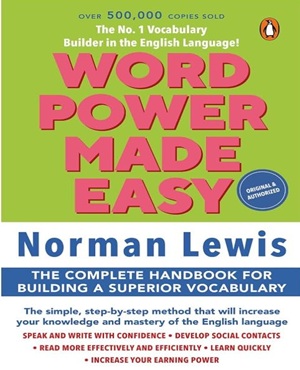
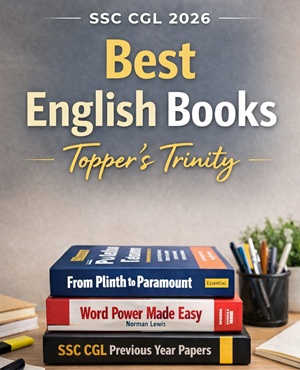
If you want to decode thousands of words using this method, you need a structured guide. In my Topper’s Trinity Strategy, I recommend the one book that every SSC topper uses to learn root words: Word Power Made Easy.

Word Power Made Easy by Norman Lewis is the “Gold Standard” for vocabulary. It doesn’t just give you a list; it teaches you the DNA of the English language.

Book image of Word Power Made Easy by Norman Lewis

Word Power Made Easy

Author: Norman Lewis
Revised: 2025
Pages: 560
Price399

Final Tip

Don’t try to memorise 5,000 words.

Instead, learn 50 root words—and let them unlock thousands for you.

Leave a Comment

Your email address will not be published. Required fields are marked *