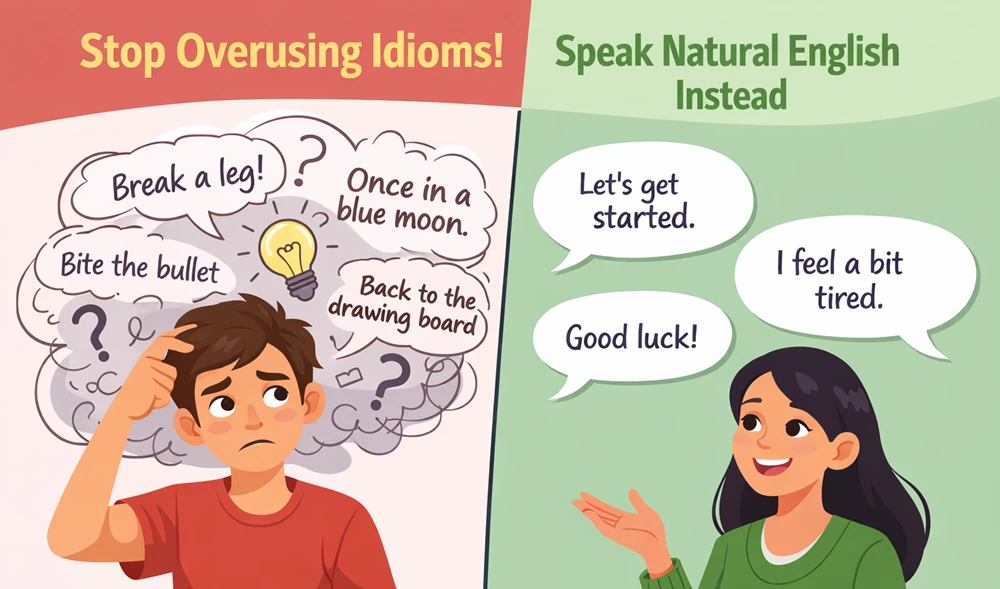
Many learners believe that using complex idioms is the fastest way to sound “advanced.” But in reality, using too many idioms—or using them incorrectly—can make your English sound unnatural or even confusing.
After 15+ years of teaching English, one thing is clear:
You don’t need 1,000 idioms to sound fluent. You just need a few that you can use naturally and confidently.
In this guide, you’ll learn 10 common English idioms that are actually used in daily conversations, workplace communication, and IELTS speaking.
Part 1: Workplace & Professional Idioms
These are perfect for emails, Zoom calls, or office meetings.
1. Get the ball rolling
Meaning: To start a process or a project.
Natural Usage: “We have a lot to cover today, so let’s get the ball rolling with the first agenda item.“
When to use: Meetings, discussions.
Avoid if: The situation is very formal or serious.
2. On the same page
Meaning: To have the same understanding or agreement as others.
Natural Usage: “Before we sign the contract, I want to make sure we are all on the same page regarding the timeline.“
When to use: Team discussions, planning.
3. Back to the drawing board
Meaning: To start over because a previous attempt failed.
Natural Usage: “The client didn’t like the first draft, so it’s back to the drawing board for the design team.”
When to use: Problem-solving situations.
4. Call it a day
Meaning: To stop working on something for the rest of the day.
Natural Usage: “We’ve made great progress. Let’s call it a day and finish the rest tomorrow morning.”
When to use: Ending work sessions.
5. Long story short
Meaning: Used to skip the boring details and get to the main point.
Natural Usage: “Long story short, we missed the flight and had to take the train instead.”
When to use: Casual or semi-formal conversations.
Avoid if: You are writing formal reports.
Part 2: Daily Life & Social Idioms
Use these when chatting with friends or in the IELTS Speaking test.
6. Under the weather
Meaning: Feeling slightly sick or unwell (usually a cold or headache).
Natural Usage: “I’m feeling a bit under the weather today, so I think I’ll skip the gym.”
When to use: Informal conversations.
7. Break a leg
Meaning: A superstitious way to say “Good luck”.
Natural Usage: “I know you’ve studied hard for your IELTS. Break a leg!”
When to use: Exams, performances.
Avoid if: The listener may misunderstand (use “good luck” instead).
8. Once in a blue moon
Meaning: Something that happens very rarely.
Natural Usage: “I don’t really like fast food, but I’ll have a burger once in a blue moon.“
9. Piece of cake
Meaning: Something that is very easy to do.
Natural Usage: “I thought the grammar quiz would be hard, but it was a piece of cake.”
When to use: Casual situations.
Avoid if: You want to sound formal.
10. Hit the books
Meaning: To study hard.
Natural Usage: “The exams start next week, so I really need to hit the books this weekend.“
The “Natural” Rule
If you have to think for more than 3 seconds about an idiom, don’t use it. The best idioms are the ones that come to you naturally. In a professional setting, it is always better to be clear and simple than to be “fancy” and confusing.
FAQs
1. Are idioms important for IELTS speaking?
Yes, but only if used naturally. Overusing idioms can reduce your score.
2. How many idioms should beginners learn?
Start with 10–20 common idioms and practice using them in real sentences.
3. Can idioms be used in formal writing?
Usually no. Idioms are best for speaking and informal communication.
Want more practice? Check out the book shown below. It is useful for academic and competitive examinations.