
In the UPSC CDS English paper, the “Usage of Paired Words” (Homophones and confusable words) is asked regularly. Confusing two similar-sounding words can change the meaning of an entire order, which is exactly why the UPSC loves this section.
These questions give you a pair of words that sound almost identical but have completely different spellings and meanings. Your job is to identify the correct word based on the sentence’s context.
In this article, you will learn:
- Important paired words for CDS 2026
- Meanings with examples
- Common mistakes candidates make
- Practice questions with answers and explanations
UPSC CDS 2026: The Ultimate Guide to Homophones & Confusable Words
1. Most Important “Trap Pairs”
Before jumping into the practice set, let’s look at the four word pairs that appear most frequently in UPSC papers:
Affect vs. Effect
Affect (Verb): To influence or produce a change. (e.g., The weather will affect our travel plans.)
Effect (Noun): The result or outcome of a change. (e.g., The new policy had a positive effect on the troops.)
Compliment vs. Complement
Compliment: An expression of praise or admiration. (e.g., He paid her a lovely compliment on her speech.)
Complement: Something that completes or brings to perfection. (e.g., Spicy pickles complement a simple meal perfectly.)
Eminent vs. Imminent
Eminent: Famous, respected, or prominent. (e.g., An eminent scientist addressed the cadets.)
Imminent: About to happen at any moment. (e.g., The dark clouds suggest that rain is imminent.)
Stationary vs. Stationery
Stationary: Not moving; fixed in one place. (e.g., The truck hit a stationary car.)
Stationery: Writing materials like pens, paper, and envelopes. (e.g., I need to buy some official stationery.)
CDS Practice Set: Usage of Paired Words
Directions: Choose the option that correctly fills the blanks in the given sentences.
1. The commander’s speech had a profound _________ on the morale of the regiment, though it didn’t _________ everyone equally.
(a) affect, effect
(b) effect, affect
(c) affect, affect
(d) effect, effect
2. The legal advisor tried to _________ the committee before giving formal _________ on the matter.
(a) council, counsel
(b) counsel, council
(c) counsel, counsel
(d) council, council
3. The borders are under _________ threat, requiring immediate action from our _________ leaders.
(a) eminent, imminent
(b) imminent, eminent
(c) imminent, imminent
(d) eminent, eminent
4. Party workers went door-to-door to _________ for votes before the election.
(a) canvass
(b) canvas
(c) canvases
(d) canvased
5. The magician created an _________ image, while the real exit remained _________ to the audience.
(a) elusive, illusive
(b) illusive, elusive
(c) illusive, illusive
(d) elusive, elusive
6. The officers worked quickly to _________ the tense situation before rumors could _________ across the camp.
(a) diffuse, defuse
(b) defuse, diffuse
(c) defuse, defuse
(d) diffuse, diffuse
7. He is known for his strong moral _________ and later became the _________ of the academy.
(a) principal, principle
(b) principle, principal
(c) principle, principle
(d) principal, principal
8. The team was asked to _________ the damage and immediately _________ the headquarters of the findings.
(a) apprise, appraise
(b) appraise, apprise
(c) appraise, appraise
(d) apprise, apprise
9. The aircraft’s design helps _________ its speed and efficiency, earning praise and many _________ from experts.
(a) complement, compliments
(b) compliment, complements
(c) complement, complements
(d) compliment, compliments
10. The rebel group was forced to _________ its weapons because they were hiding in an illegal _________ deep in the forest.
(a) hoard, horde
(b) horde, hoard
(c) cede, seed
(d) None of the above
Answer Key & Explanations
(b) effect, affect – The first blank needs a noun (a profound effect), and the second blank needs a verb (to affect everyone).
(c) counsel, counsel – “Counsel” as a verb means to advise, and as a noun, it means legal advice. “Council” refers to an assembly or committee.
(b) imminent, eminent – Imminent means about to happen (threat); eminent means prominent or distinguished (leaders).
(a) canvass – To canvass means to solicit votes or support. Canvas is the coarse cloth used for tents.
(b) illusive, elusive – Illusive means deceptive or based on an illusion; elusive means difficult to find, catch, or achieve.
(b) defuse, diffuse – To defuse means to make a situation less dangerous (like defusing a bomb); to diffuse means to spread over a wide area.
(b) principle, principal – Principle means a fundamental truth or moral rule; Principal refers to a person of high authority or head of an institution.
(b) appraise, apprise – To appraise means to assess the value or quality of something; to apprise means to inform or tell someone.
(a) complement, compliments – Complement means to add to in a way that enhances; compliments means expressions of praise.
(a) hoard, horde – To hoard means to accumulate and hide a store of valued objects (weapons); a horde is a large group of people (rebels).
Common Mistakes
CDS aspirants often make these mistakes in the exam:
- Memorising Without Context (They memorise meanings of the words but fail to apply them in sentences)
- Ignoring Parts of Speech (Understanding whether the blank requires a noun, verb, or adjective is important)
- Relying Only on Pronunciation (Words may sound similar but differ completely in meaning and spelling)
Quick Tips to Master Paired Words
- Read English newspapers daily.
- Learn words as used in sentences.
- Take notes of confusing word pairs and revise weekly.
- Practice the previous years’ CDS English papers.
- Focus on sentence context. Don’t just memorise isolated words.
Recommended Resources for CDS Practice
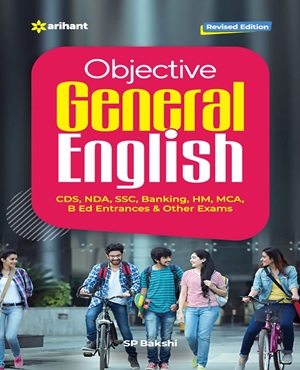
To build a solid vocabulary that covers these subtle differences, read Objective General English by S.P. Bakshi, which is excellent for your practice. This book features a dedicated section on “Words Often Confused and Misused” that aligns perfectly with the UPSC style of questioning. It also includes expert tips and tricks to solve various question types asked in competitive exams.
For your study and practice set for the exam, check out this link → Best Books for CDS English
Key Takeaways
- Paired words are a high-scoring topic in CDS English.
- See words in action in sentences rather than learning isolated words.
- Learn how words function naturally in the sentences.
- Practice regularly to avoid confusion during the exam.
Practice daily, revise regularly, and you will score high in the CDS exam.