In the NDA 2026 English paper, “Idioms and Phrases” are among the highest-scoring topics. For a defence aspirant, this section is pure gold—there are no complex grammar rules to apply, and no long passages to read. It just tests your vocabulary and understanding of common expressions.
UPSC frequently asks idioms that reflect action, leadership, courage, crisis, and decision-making—qualities expected of a future military officer.
Many NDA aspirants lose easy marks because they try to memorise hundreds of random idioms without a proper strategy. A smarter approach is to focus on idioms often asked in the exam and learn them through context, examples, and thematic categories.
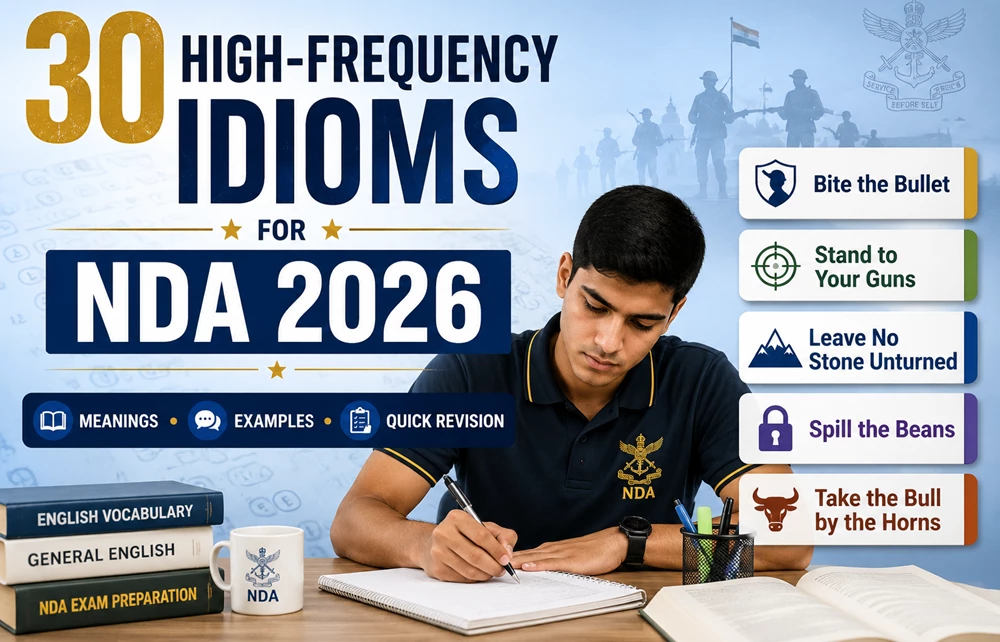
Master these 30 high-frequency idioms compiled for you and categorised by their contextual themes to significantly improve your score in the English paper.
Note: Although it focuses on the UPSC NDA exam, this guide is also useful for other competitive exams and for general learners interested in learning English idioms and phrases.
30 High-Frequency Idioms and Phrases for NDA 2026 Preparation
1. Leadership, Courage & Discipline (The “Officer” Traits)
These idioms are frequently used in military contexts to describe character, resolve, and duty. So, learn them for the exam.
To bite the bullet
Meaning: To face a difficult or painful situation with courage and grim determination.
Sentence: The platoon had to bite the bullet and march through the heavy downpour to reach the outpost.
To show the white feather
Meaning: To act like a coward or show signs of fear.
Sentence: True cadets never show the white feather, even when facing overwhelming odds.
Burn the midnight oil
Meaning: To work or study late into the night.
Sentence: Aspirants must burn the midnight oil to clear both the Mathematics and GAT papers.
Stand to one’s guns
Meaning: To maintain one’s position or opinions in the face of heavy opposition.
Sentence: Despite fierce criticism from the committee, the captain stood to his guns.
To take the bull by the horns
Meaning: To deal with a difficult situation directly and courageously.
Sentence: Instead of delaying the decision, the commander took the bull by the horns and ordered the evacuation.
True to one’s salt
Meaning: Faithful and loyal to one’s employer or country.
Sentence: The soldiers proved true to their salt by defending the border until their last breath.
2. Crisis, Conflict & High-Stakes Situations
These phrases describe tense moments, strategy shifts, or operational deadlocks.
At daggers drawn
Meaning: Bitterly hostile or on the verge of an open fight.
Sentence: The two rival factions have been at daggers drawn over the border territory for decades.
Between the devil and the deep blue sea
Meaning: Facing a dilemma with two equally undesirable choices.
Sentence: Trapped by the river on one side and enemy fire on the other, the unit was between the devil and the deep blue sea.
A bolt from the blue
Meaning: A sudden, completely unexpected event or piece of news.
Sentence: The sudden deployment order came as a bolt from the blue for the newly joined officers.
To burn one’s boats/bridges
Meaning: To take a course of action that makes retreat or turning back completely impossible.
Sentence: By signing the final treaty, the nation has burned its boats and committed fully to the alliance.
To be in a tight corner
Meaning: To be in a very difficult, restrictive, or dangerous situation.
Sentence: The scouting party found themselves in a tight corner when their communication equipment failed.
In the teeth of
Meaning: In direct opposition to or despite great difficulties.
Sentence: The rescue helicopter landed safely in the teeth of a raging blizzard.
3. Strategy, Planning & Deception
UPSC loves testing phrases that deal with hidden agendas, planning, and tactical execution.
To keep something under wraps
Meaning: To keep a plan, project, or piece of information completely secret.
Sentence: The details of the counter-offensive operation were kept strictly under wraps.
A card up one’s sleeve
Meaning: A secret plan, idea, or advantage kept in reserve until needed.
Sentence: The strategic commander always keeps a card up his sleeve for unexpected emergencies.
To read between the lines
Meaning: To understand the hidden or implied meaning behind a statement or document.
Sentence: Intelligence officers must read between the lines of intercepted radio transmissions.
To bury the hatchet
Meaning: To make peace, end a conflict, and become friendly again.
Sentence: After years of border skirmishes, the two neighbouring countries finally decided to bury the hatchet.
Leave no stone unturned
Meaning: To try every possible means to achieve an objective or solve a problem.
Sentence: The search-and-rescue team left no stone unturned while looking for the missing mountaineers.
To fish in troubled waters
Meaning: To take advantage of a chaotic or difficult situation for personal gain.
Sentence: Foreign agents often try to fish in troubled waters during domestic political crises.
4. Human Behaviour & Communication
These idioms appear heavily in the options of the NDA paper to test your understanding of human interaction.
An axe to grind
Meaning: Having a selfish, hidden personal motive for doing something.
Sentence: Be careful of his advice; he often has a private axe to grind.
To blow one’s own trumpet
Meaning: To praise oneself or boast about one’s own achievements.
Sentence: True leaders let their actions speak for them instead of blowing their own trumpet.
To call a spade a spade
Meaning: To speak completely frankly and directly, even if it is unpleasant.
Sentence: The academy instructor is known to call a spade a spade when evaluating your physical performance.
Fair-weather friend
Meaning: A person who is helpful or friendly only when times are good and comfortable.
Sentence: Do not rely on fair-weather friends when you encounter genuine hardships.
Gift of the gab
Meaning: The ability to speak eloquently, persuasively, and smoothly.
Sentence: As a diplomat, she relies heavily on her natural gift of the gab to negotiate complex treaties.
To spill the beans
Meaning: To reveal secret information unintentionally or prematurely.
Sentence: The operation was compromised because a junior officer accidentally spilt the beans to a reporter.
5. Miscellaneous UPSC Favourites
Cold comfort
Meaning: Poor or inadequate consolation that does not actually make someone feel better.
Sentence: Knowing that others failed the physical test was cold comfort to the rejected candidate.
To kick the bucket
Meaning: An informal, idiomatic way to say that someone has died.
Sentence: The old war veteran finally kicked the bucket at the age of ninety-five.
A wild goose chase
Meaning: A foolish, hopeless, or completely unproductive search or pursuit.
Following the unverified coordinates turned out to be a wild goose chase through the jungle.
Spick and span
Meaning: Completely neat, clean, spotless, and perfectly organised.
Sentence: The cadets spent the entire morning making sure the barracks were spick and span before inspection.
To add insult to injury
Meaning: To make a bad situation even worse by adding an extra layer of trouble or humiliation.
Sentence: First, his bike broke down in the rain, and then, to add insult to injury, he lost his hall ticket.
To rain cats and dogs
Meaning: To rain heavily, intensely, and continuously.
Sentence: It was raining cats and dogs, making navigation through the mountain pass nearly impossible.
Quick Revision Table
Instead of staring at a flat list, categorise them inside your study notebook by their emotional or situational tone:
| Category | Idioms to Remember |
|---|---|
| Leadership & Courage | Bite the bullet, Stand to one’s guns, Take the bull by the horns, True to one’s salt |
| Hard Work & Discipline | Burn the midnight oil |
| Crisis & Conflict | At daggers drawn, Between the devil and the deep blue sea, In a tight corner, In the teeth of |
| Strategy & Planning | Under wraps, A card up one’s sleeve, Read between the lines, Leave no stone unturned |
| Communication | Call a spade a spade, Gift of the gab, Spill the beans |
| Human Nature | Fair-weather friend, An axe to grind, Blow one’s own trumpet |
| Miscellaneous | Cold comfort, Wild goose chase, Spick and span, Add insult to injury, Rain cats and dogs |
How to Remember Idioms Faster
Instead of memorising definitions mechanically, try these proven techniques:
1. Learn Through Context
Read the example sentence carefully and imagine a real-life situation where the idiom can be used.
2. Create Flashcards
Write the idiom on one side and its meaning on the other. Review them daily for 10–15 minutes.
3. Group Similar Idioms Together
Studying related idioms together improves retention. For example:
- Courage: Bite the bullet, Take the bull by the horns
- Conflict: At daggers drawn, In a tight corner
- Secrets & Information: Under wraps, Spill the beans, Read between the lines
4. Solve Previous-Year Questions
The best way to understand how idioms are tested is to practice NDA and other defence-exam English questions regularly.
Recommended Books for NDA 2026 Preparation
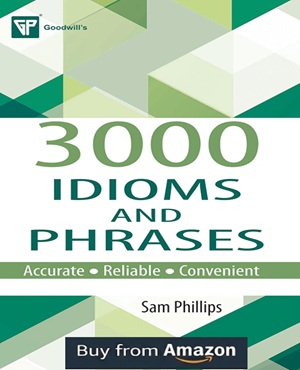
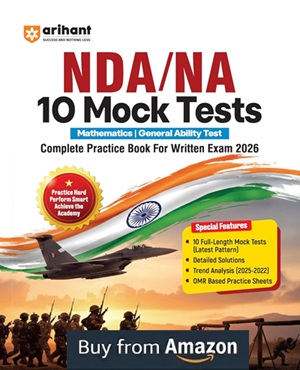
The above 30 phrases are from the most repeated and important ones in the exam. To study more of them and learn UPSC question patterns, the following books are highly recommended:
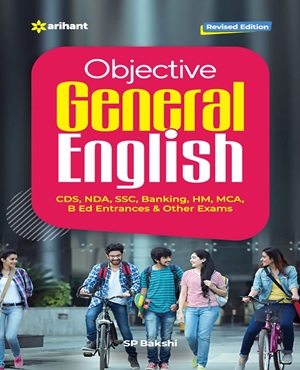
Objective General English by S.P. Bakshi: Contains an exhaustive, alphabetically organised list of over 500 idioms with explicit examples, vocabulary questions, and practice exercises.
Arihant Pathfinder for NDA/NA: Features excellent previous-year question sets that help you understand the actual exam pattern.
See the best books, including the two from this link → Best Books for NDA English Paper
Final Tips
Idioms and Phrases can become one of the easiest scoring areas in the NDA English paper if approached systematically. Rather than trying to memorise thousands of expressions, first focus on the most repeated ones in the previous years’ papers, revising them regularly, and practising their usage in context.
Start with the 30 idioms covered in this article and practice with the previous-year NDA papers. Consistent revision will help you recognise these expressions instantly during the exam and convert them into valuable marks.